What’s It Like to Live in Penrith?
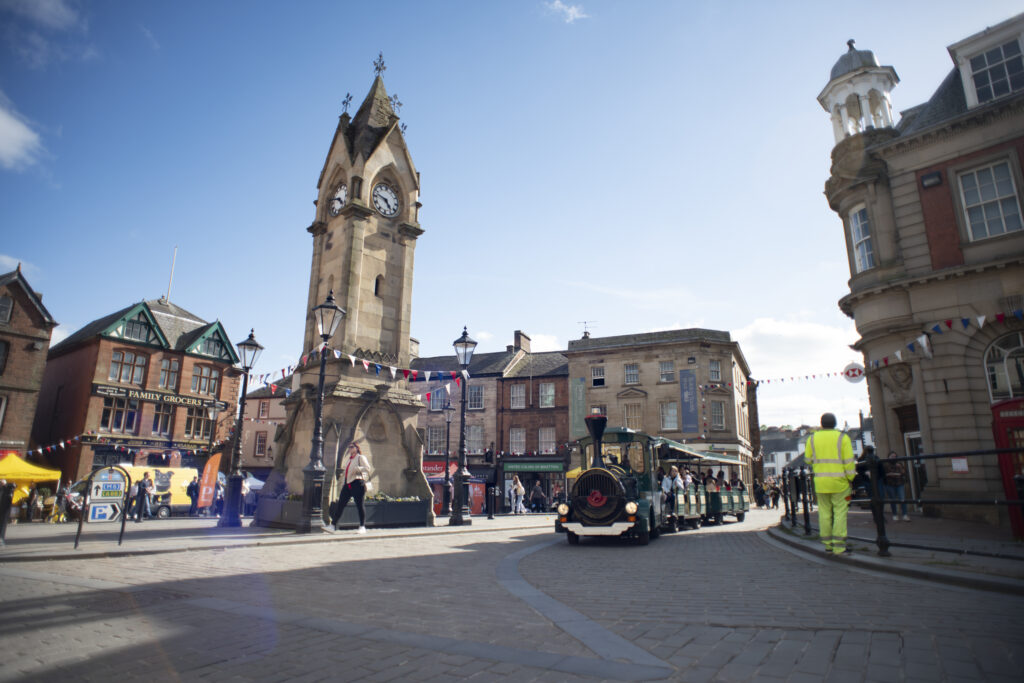
Penrith is the kind of place that surprises people who haven’t spent time there. The town itself — population around 16,000 — has the practical amenities of a well-functioning market town: a good high street, Booths and Sainsbury’s supermarkets, independent shops, cafes and restaurants, a theatre, a sports centre and a genuine community identity that many larger places have lost. What makes it genuinely exceptional is what surrounds it.
Junction 40 of the M6 sits five minutes from the town centre. The Lake District National Park boundary is barely a 20-minute drive. Ullswater — widely considered one of the finest lakes in England — is closer still. The North Pennines AONB lies to the east. The Eden Valley, one of Cumbria’s least-publicised but most beautiful landscapes, runs south from the town’s doorstep. Buyers moving to Penrith aren’t making a compromise — they’re making a choice that most people who live here consider one of the best they’ve ever made.
Moving to Penrith? Here’s What Buyers Need to Know
A Market Town With an Exceptional Setting
Penrith is the kind of place that surprises people who haven’t spent time there. The town itself — population around 16,000 — has the practical amenities of a well-functioning market town: a good high street, Booths and Sainsbury’s supermarkets, independent shops, cafes and restaurants, a theatre, a sports centre and a genuine community identity that many larger places have lost. What makes it genuinely exceptional is what surrounds it.
Junction 40 of the M6 sits five minutes from the town centre. The Lake District National Park boundary is barely a 20-minute drive. Ullswater — widely considered one of the finest lakes in England — is closer still. The North Pennines AONB lies to the east. The Eden Valley, one of Cumbria’s least-publicised but most beautiful landscapes, runs south from the town’s doorstep. Buyers moving to Penrith aren’t making a compromise — they’re making a choice that most people who live here consider one of the best they’ve ever made.
Understanding Penrith’s Building Stock
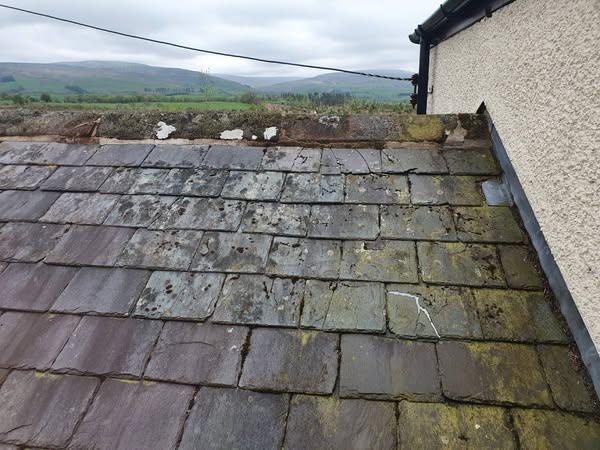
The town’s built environment tells its history clearly. The historic centre — around Devonshire Street, Castlegate and the market square — is characterised by red sandstone construction, much of it Victorian or older. Sandstone is a beautiful material and a durable one, but it weathers differently from brick, can hold moisture in ways that lead to specific damp patterns and requires specialist knowledge to survey accurately. Buyers attracted to Penrith’s older centre should ensure their surveyor has genuine experience with traditional stone construction.
Moving outward from the centre, the character shifts through interwar and post-war development — predominantly brick-built semis and detached homes in Carleton, Pategill, Scaws and the western residential areas. These are generally solid and practical properties, but their condition varies considerably with maintenance history, and the volume of extensions and alterations added over the decades means each property merits individual assessment.
The newest developments on the edges of town — Carleton Chase, Pennyhill Vale and Chase Park — offer modern specification, high energy efficiency and new-build warranties, but still benefit from an independent survey before completion to ensure the build quality meets expectations.
Rural Properties in the Surrounding Area
A significant proportion of buyers who search for property in Penrith are specifically looking beyond the town — at the villages of the Eden Valley, the farmhouses and cottages of the Ullswater corridor and the properties scattered across the fells of the North Pennines. These are some of the most characterful properties in England. They’re also some of the most complex to survey.
Traditional Cumbrian farmhouses are typically built in local stone, often with rubble-fill walls and lime mortar — construction types that are largely self-regulating in terms of moisture movement but that require care when modern materials are introduced. Many rural properties in this area have been extended, partially converted or modified over many decades, sometimes without building control oversight. Agricultural buildings converted into residential use bring their own structural and regulatory questions.
If you’re buying a rural property within reach of Penrith — whether in Clifton, Askham, Shap, Great Strickland, Langwathby or any of the Eden Valley villages — a Level 3 Building Survey is not optional. It’s the baseline.
Flood Risk and Environmental Considerations
The River Eamont runs through Penrith, and parts of the town are within defined flood risk zones — particularly areas in proximity to the river and its tributaries. The Environment Agency’s flood risk maps should be consulted for any property that sits close to a watercourse. The wider Eden Valley has also seen flooding events in recent years, and buyers considering rural or riverside properties should carry out careful due diligence on flood history as well as current risk designations.
Radon levels in parts of Cumbria are above the national average, driven by the underlying geology of the region. The UK Health Security Agency’s postcode radon checker is worth consulting for any specific property under consideration. Where elevated risk is identified, mitigation measures are well-established and cost-effective.
Getting Around from Penrith
Penrith punches well above its size for transport connections. Junction 40 of the M6 — one of the motorway’s main northern gateways — is almost at the edge of town, giving straightforward road access south to Manchester (approximately 90 minutes), north to Carlisle (30 minutes) and beyond to Scotland, and east via the A66 to the A1 and the North East.
Penrith train station sits on the West Coast Main Line, with direct services to Carlisle, Oxenholme and the south, including London Euston in approximately three hours. Local bus services connect the town to the surrounding villages, and Stagecoach operates routes through the Eden Valley. For those working in Carlisle, the commute by either road or rail is one of the most manageable in the north of England.
Schools and Family Life
Penrith’s schooling is a genuine draw for family buyers. The town’s primary schools are consistently well-regarded, and Queen Elizabeth Grammar School — a selective secondary — is one of the most respected state schools in Cumbria and draws pupils from across the Eden district. Ullswater Community College provides the main non-selective secondary option in the town.
For families, the outdoor leisure opportunities around Penrith are unmatched. Castle Park in the town centre has play areas, tennis courts and open green space. Ullswater is within reach for sailing, paddleboarding and walking. The Lake District’s trail network is accessible for cycling and hiking within minutes of leaving the town. The combination of a solid school offer and extraordinary natural environment makes Penrith a compelling choice for families relocating from cities.
How Penrith Compares
Against other Cumbrian towns, Penrith offers the strongest all-round package. Carlisle is larger and has more employment, but lacks Penrith’s proximity to the national park and the Eden Valley. Kendal offers a comparable feel but with higher prices and more traffic. Keswick and the central Lake District are more scenic but have more constrained housing supply and higher property costs driven by the holiday let market. Penrith consistently offers the best balance of connectivity, affordability, community and natural environment of any town in the county.
Penrith Property Market — 2026 Overview
Penrith’s property market is distinctly local in character — relatively low transaction volumes compared to larger urban centres, but consistent underlying demand from buyers relocating from cities in search of space, quality of life and proximity to some of England’s finest countryside. The average sale price across the town sits at approximately £234,000 based on recent Land Registry transactions, with meaningful variation between areas — Carleton to the east recording stronger prices around £280,000, while the town’s more affordable western and southern streets offer entry points well below £200,000.
The market has remained broadly stable through 2025 and into 2026, with house prices in the CA11 postcode growing 4% over the past year. Detached homes in desirable positions — particularly those with fell views or close to the Eden Valley villages — continue to attract competitive interest and achieve prices well above the town average. The Carleton area specifically has seen consistent price growth of 13.3% over five years, reflecting its position as Penrith’s most consistently in-demand residential neighbourhood.
New housing development is actively expanding the town’s supply, with several schemes approved or under construction during 2025–26, bringing a range of new homes to both the northern and southern edges of the town.
| Property Type |
Average Price |
Notes |
| Terraced |
£188,000 |
Strong first-time buyer demand |
| Semi-detached |
£258,000 |
Most Sales |
| Detached |
£390,000 |
High demand in Carleton and villages |
Source: Land Registry / HM Land Registry 2026
New Housing Development in Penrith (2025–2026)
Penrith is seeing sustained residential development activity as Westmorland and Furness Council works to address local housing need and attract working-age residents to the town:
- Pennyhill Vale— Persimmon’s 229-home development on the outskirts of Penrith, including 68 homes to be transferred to a housing association partner for affordable tenure. Under active development in 2026.
- Story Homes — 194 homes (approved May 2026) — A significant new residential scheme approved by Westmorland and Furness Council in May 2026, described as providing an appropriate extension to the urban environment with new walking routes and connected open spaces.
- Carleton Chase — Barratt Homes’ development of 3 and 4-bedroom homes in Carleton, designed to high energy efficiency standards and positioned close to Junction 40 of the M6.
- Chase Park, White Ox Farm — A 76-home development by Atkinson Contractors and Riverside Housing, in its final stages of construction at the time of writing.
- Centurion Phase Two — An affordable and market housing development highlighted in Westmorland and Furness Council planning discussions as an example of the type of mixed-tenure development needed to sustain Penrith’s community.
Westmorland and Furness Council continues to prioritise housing delivery across Penrith as part of its wider local plan, with a clear recognition that the town needs to grow its working-age population to support long-term economic sustainability.