














What’s it like living in Bedfordshire?
Bedfordshire rarely tops the lists that rank England’s most desirable counties — and that’s precisely why it keeps attracting buyers who do their homework. Under an hour to St Pancras by train from Bedford. Forty minutes from Cambridge by road. The M1 running through its western flank. Luton Airport on its southern edge. For buyers who need connectivity without London prices, Bedfordshire is difficult to beat.
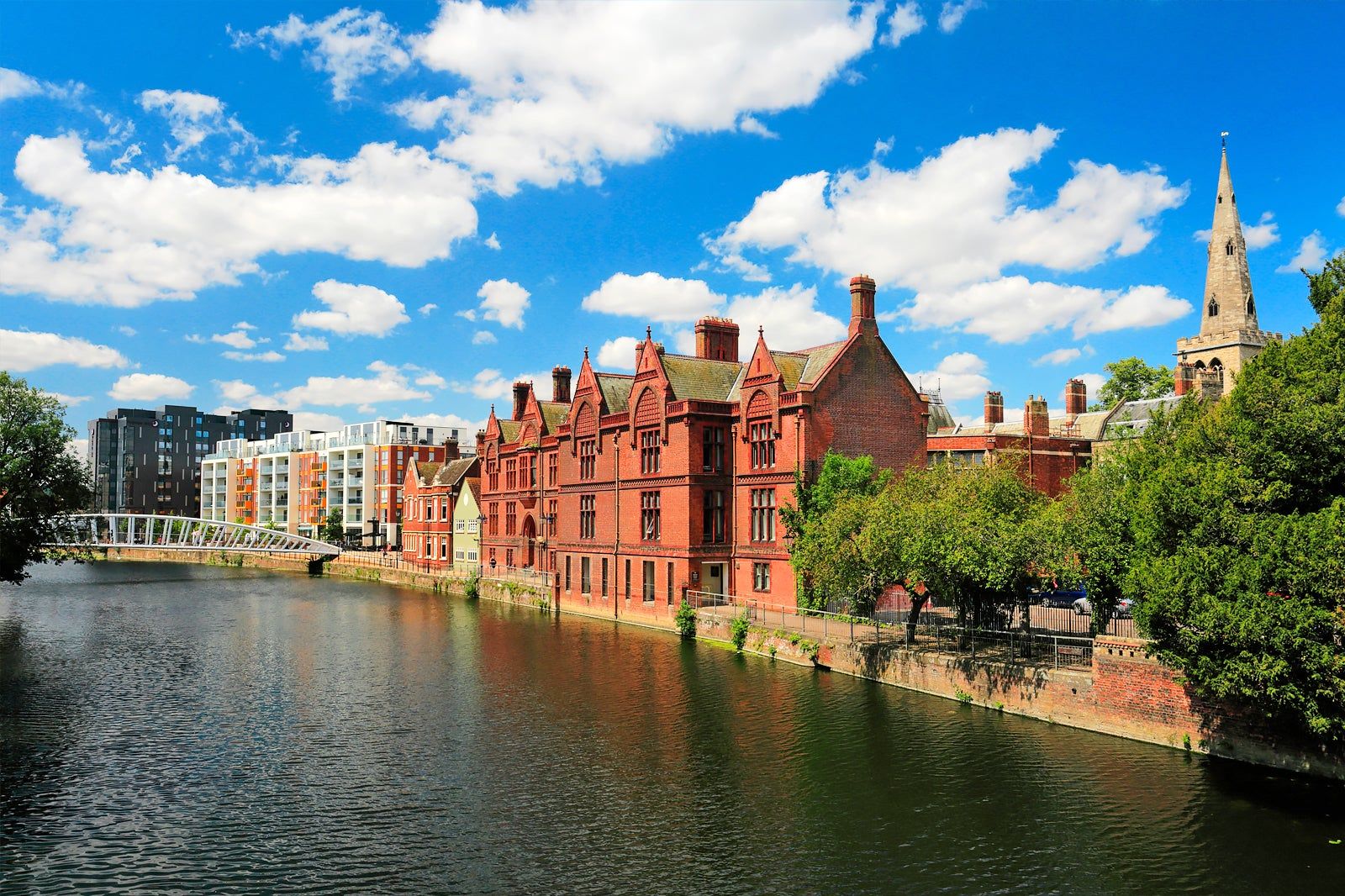
Beyond the logistics, the county has real character. The River Great Ouse through Bedford creates a riverfront that rivals far more famous towns. The Chiltern Hills AONB edges into its southern boundary, bringing genuine countryside to the doorstep. Woburn Abbey and its deer park — one of England’s most visited stately homes— sits at the county’s heart. The Greensand Ridge offers elevated walking and cycling routes across a landscape shaped by the same clay that once made the county famous for brick manufacturing.
Understanding Bedfordshire’s Property Types
Buyers approaching Bedfordshire for the first time are sometimes surprised by how varied the housing stock is across a relatively compact county. Bedford town centre and its immediate suburbs contain a substantial volume of Victorian and Edwardian housing — bay-fronted terraces, red brick semis and larger villas — alongside significant interwar development and post-war council and private estates. The town centre itself has Georgian and Regency buildings close to the embankment.
Luton’s housing stock is denser and more urban. The town has a high concentration of interwar terraces and semis, a growing apartment sector and some Victorian stock in its older residential areas. Dunstable and Leighton Buzzard sit on the chalk edge of the Chilterns, where the underlying geology shifts noticeably from the clay-based soils of the north and centre. Properties here require an awareness of chalk shrinkage and subsidence risk that differs from what you’d encounter in Bedford.
Central Bedfordshire’s market towns — Biggleswade, Sandy, Ampthill, Flitwick, Shefford — each have their own character. Ampthill and Woburn have a significant stock of period cottages, Georgian townhouses and listed properties within conservation areas. Biggleswade and Sandy are more practically minded towns with a mix of housing types and strong commuter appeal given their position on the East Midlands Railway main line.
The county’s villages run the full range — from picture-postcard settlements like Odell and Felmersham in the north to the more aspirational commuter villages around Woburn and the Chiltern fringe in the south.
Flooding and Environmental Considerations
The River Great Ouse and its tributaries — including the River Ivel and the River Ouzel — run through Bedfordshire, and flood risk is a relevant consideration for buyers looking at properties close to these watercourses. The Environment Agency’s flood risk maps should be consulted for any riverside or low-lying property, particularly in Bedford, St Neots area, Sandy and Biggleswade.
Radon levels in Bedfordshire are generally low but vary across the county. Buyers should check the specific postcode for any property under consideration using the UK Health Security Agency’s radon risk maps. Mitigation is straightforward and inexpensive where required.
Getting Around Bedfordshire
Transport connectivity is one of Bedfordshire’s defining characteristics and a primary driver of buyer demand. The Thameslink service from Bedford reaches London St Pancras in around 45 minutes and runs direct to Brighton, Gatwick and Cambridge. East Midlands Railway provides an additional route south into London and north to the Midlands and Sheffield. Luton Airport Parkway gives direct rail access to Luton Airport, which serves a wide range of European and domestic destinations.
By road, the M1 connects the western side of the county to London in around an hour in normal traffic conditions and north to Leicester, Nottingham and Sheffield. The A1 runs through the east of the county, providing the main artery towards Cambridge and the North. The A5 and A6 give cross-county connectivity. Bedford’s central location means most of the county is within a 30-minute drive — which makes it unusually flexible for buyers whose work takes them to multiple locations.
Schools and Education
Bedfordshire has strong educational provision at both primary and secondary level. Bedford itself has a notable tradition of independent schooling, with Bedford School, Dame Alice Harpur School and Bedford Modern School all based in the town and regularly appearing in national performance tables. State provision in the county includes a number of selective grammar schools in the Luton area and a range of well-regarded comprehensive and faith schools across the county.
For families with university in mind, Bedford College provides local further education, and the proximity of Cambridge — one of the world’s leading university cities — is an asset that influences buyer decisions across north and central Bedfordshire.
How Bedfordshire Compares
Against Hertfordshire to the south-east, Bedfordshire offers considerably better value for money — similar London commute times at materially lower price points, particularly in Bedford and Central Bedfordshire. Against Northamptonshire to the north, Bedfordshire’s transport links are stronger and its proximity to the Oxford-Cambridge Arc gives it a clearer long-term growth story. Against Buckinghamshire to the west, it offers a more accessible entry point without the green belt restrictions that limit supply in many Bucks locations. For buyers who’ve been priced out of the Home Counties but don’t want to sacrifice connectivity, Bedfordshire is consistently one of the strongest alternatives.
Best Places to Live in Bedfordshire
Best for Families:
Bedford Town and Suburbs
- Pros: The county town offers the most complete package for family buyers — a genuine high street, riverside parks, strong schooling options including some of the country’s best-known independent schools, multiple rail services to London and Cambridge and a diverse range of housing from Victorian terraces to new builds. De Parys Avenue and the surrounding roads north of the town centre are among the most consistently sought-after residential addresses.
- Cons: Good family homes close to the best schools are in high demand and are priced accordingly. The town centre has the typical challenges of urban living — parking, traffic and noise in the busier streets.
Ampthill
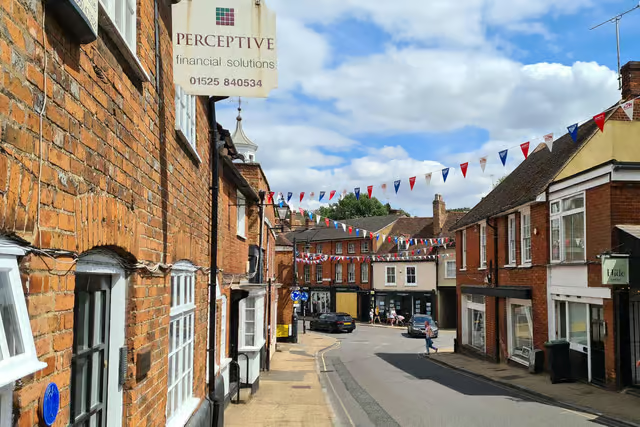
- Pros: One of Central Bedfordshire’s most attractive market towns. A conservation area centred on a Georgian high street, good primary and secondary schooling, Ampthill Park on the doorstep and a strong community. Popular with London commuters who want genuine period charm without paying Chilterns prices.
- Cons: Rail access requires a drive to Flitwick or Bedford. Property in the most desirable parts of the town sells quickly and at a premium for the area.
Woburn and Woburn Sands
- Pros: Two distinct but complementary villages with a genuine character. Woburn’s historic estate village setting — with the Abbey and Safari Park — creates a one-of-a-kind residential environment. Woburn Sands has better everyday amenities and rail access. Both attract families who prioritise environment over convenience.
- Cons: Both command some of the highest prices in the county for their property types. Woburn Sands sits technically in Milton Keynes borough, so check school catchments carefully.
Best for Commuters and Young Professionals:
Flitwick and Harlington
- Pros: Outstanding value for a Thameslink station town. Flitwick has direct services to London St Pancras in around 50 minutes and good local amenities. A mix of interwar semis and newer builds makes it an accessible entry point into Central Bedfordshire’s market.
- Cons: Primarily a commuter town rather than a destination in its own right. Limited independent retail and evening offer compared to Ampthill or Bedford.
Biggleswade and Sandy
- Pros: Sandy is Bedfordshire’s strongest performing market by annual price growth (+8.1% in the past year). Both towns sit on the East Midlands Railway line with fast services to London. More affordable than equivalent commuter towns in Hertfordshire or Cambridgeshire. Growing independently as employment centres in their own right.
- Cons: Less established in terms of lifestyle offer than Bedford or Ampthill. Infrastructure has not always kept pace with population growth.
Luton
- Pros: The county’s largest town and most active property market. Competitive entry-level pricing, direct rail access to London, an expanding local economy anchored by the airport and logistics sector and a genuinely diverse food and culture scene. Increasingly popular with buyers priced out of London and the nearer Home Counties.
- Cons: Crime rates are higher than elsewhere in the county. Quality varies considerably between neighbourhoods — research specific streets carefully before committing.
Best for Those Wanting Rural Life With Connectivity:
Sharnbrook and North Bedfordshire Villages
- Pros: The villages north of Bedford — Sharnbrook, Pavenham, Felmersham, Odell — offer genuine countryside living at prices that remain accessible relative to similar stock in the Chilterns or Cotswolds. A strong sense of community, period cottages and farmhouses and easy road access to Bedford and the A1.
- Cons: Car is essential for almost everything. Primary schooling in village schools — secondary requires transport to Bedford or Rushden. Broadband connectivity varies by village.
Leighton Buzzard
- Pros: A market town on the southern edge of the county with good Thameslink services to London Euston and Milton Keynes. A mix of period and newer housing, expanding local amenities and proximity to both the Chilterns and the Grand Union Canal. Increasingly popular as buyers follow the Thameslink line south from Bedford in search of better value.
- Cons: Town centre traffic and parking frustrations are a consistent complaint among residents. Some of the newer peripheral estates feel disconnected from the town centre.
Greensand Ridge Villages (Haynes, Clophill, Maulden)
- Pros: One of Bedfordshire’s best-kept secrets — a ridge of elevated, wooded countryside running across the centre of the county, with village communities, excellent walking and cycling, and housing that ranges from thatched cottages to architect-designed modern homes. Close enough to Ampthill and Flitwick to be practical without feeling suburban.
- Cons: Very limited supply — when properties come to market here, they go quickly. Most daily needs require a car.